
With a proven track record of helping its beneficiaries bring unique products to market through its expanding livelihood programs, Barefoot College International is now moving into a new product production to spur economic opportunity in Zanzibar.
Steady growth has increased economic opportunity in beekeeping with the B. Barefoot products sold in Zanzibar, an eco-lodge in Madagascar, and fair-trade coffee in Guatemala. Now BCI is diving into the blue economy with seaweed cultivation and production from its Zanzibar training center.
“We discovered that 82% of Barefoot beneficiaries engage in seaweed farming,” said BCI-Zanzibar Country Director Brenda Geofrey. “But the middle-men pay so little for the raw materials that it is a type of exploitation. The women need the opportunity to sell directly and improve the amount they get paid.”
BCI is about to provide that opportunity, thanks in part to a grant from The Cultures of Resistance Network Foundation in support of Zanzibar’s seaweed initiative.
The master trainers at the regional center—many who also harvest seaweed—will soon be trained on the equipment to dry the seaweed and make it into products like soap for the local marketplace.
“Sources of the raw material have been assured and we are very excited to see the progression of the project,” said BCI Director of Strategic Partnerships Sue Stevenson.
BCI and The Zanzibar Economic Empowerment Agency discussed these opportunities during a recent meeting in Zanzibar.
“The traditional way is to wait for the sun to dry the seaweed,” Executive Director Juma Burhan Mohamed said. “So we can make that faster. We have already trained women empowered to electrify their village. Imagine if we can train so many more to dry seaweed and other spices for the economy. I really like that we work on that.”
Global interest in fostering sustainable blue economic opportunity is on the rise, according to a recent European Union report, and “promotes resource efficiency, resilience, and competitiveness, while working to eliminate net greenhouse gas emissions and protect natural capital, according to the commission.”
The blue economy encompasses all economic activities based on or related to the ocean, seas and coasts.
A BCI beachhead in Uzi Village
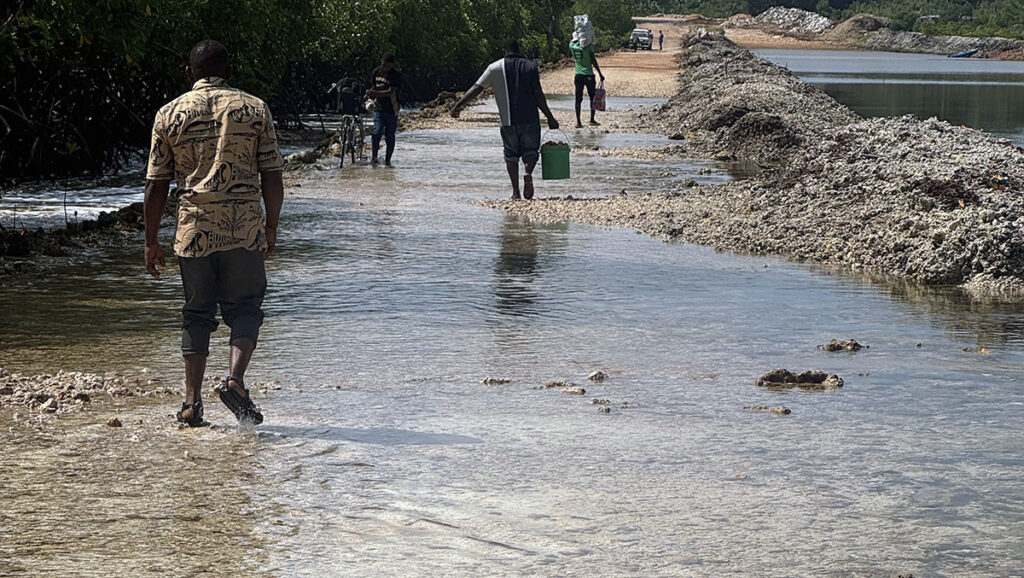
The Uzi village in southern Zanzibar has close ties to BCI and its regional training center in Zanzibar. Four women from the village trained as solar engineers and returned to electrify their village. Solar power is essential as the village faces a natural obstacle on a daily basis. High tides wash over and block the only road into and out of the village. While a bridge is now under construction, the village has adapted to life on the very edge of the sea with limited access to the rest of the island.
After BCI electrified the village, it continued to spur economic opportunity and growth.
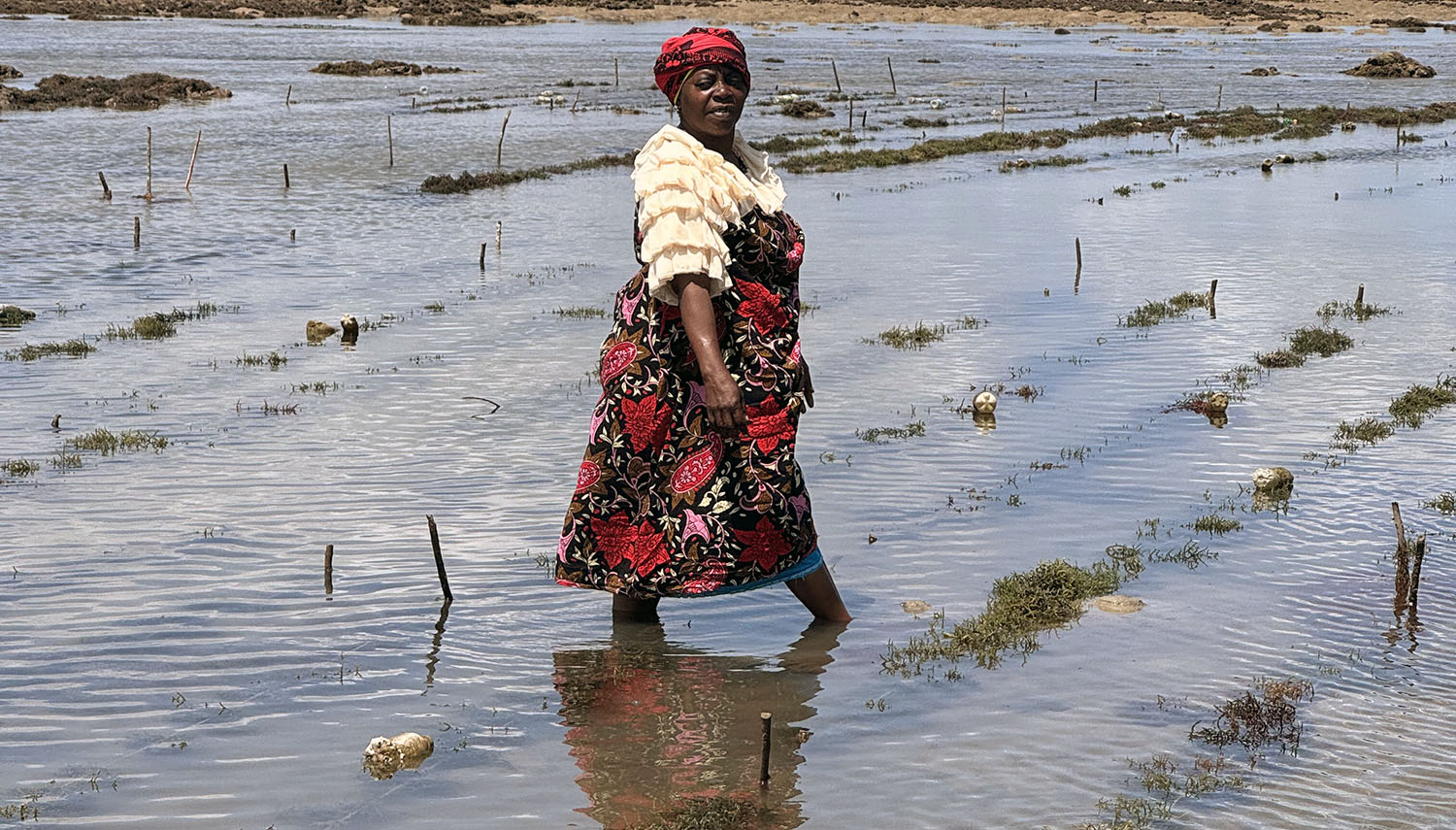
Bi. Mwajina was one of the solar engineers trained at the regional center. She electrified 25 homes when she returned and now helps maintain the equipment, which the village pays her to do. She also continues to harvest seaweed, doing the back-breaking word of tying the nets in the tides, checking them and harvesting 3-4 times a year.
Mwajina, 52, still has energy for the work. She has begun training her family to help with the harvest, even helping some to learn to swim.
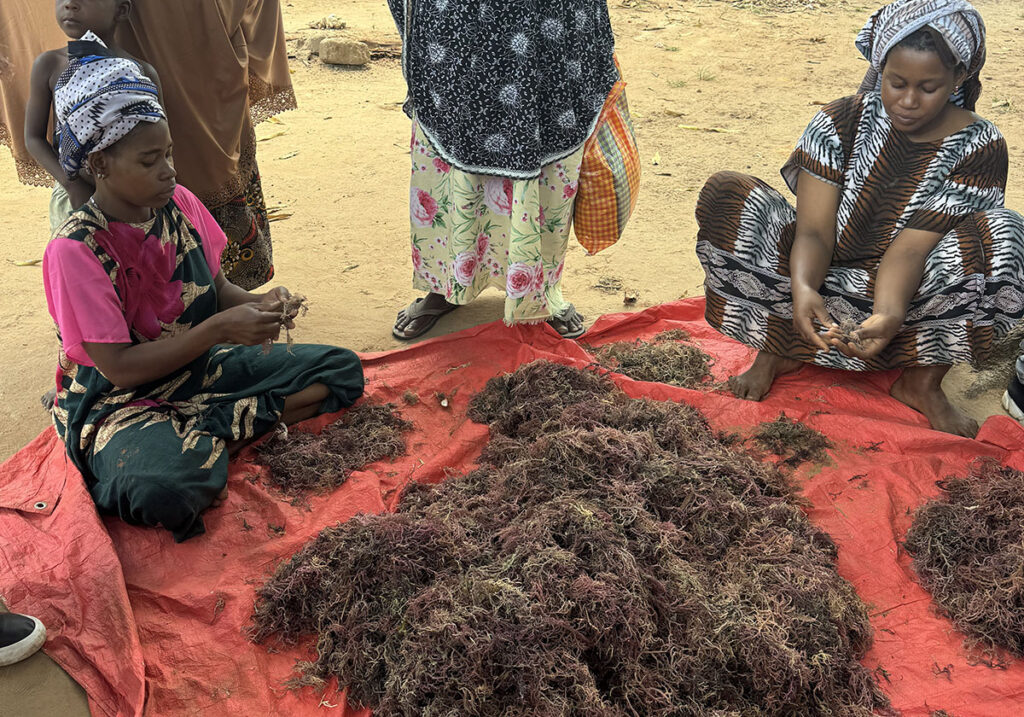
During the harvest, the raw seaweed is brought back to the village where family members help separate and clean the seaweed so it can set out to dry.
Solar, honey, seaweed all contribute to economic opportunity
The relationship with BCI and Uzi expanded in the years since the village was electrified. Several women were trained as beekeepers and have since expanded operations to more than two dozen hives. The village is now making its own hives and cultivating honey to be sold under the B. Barefoot label, but also locally.
Uzi is able to cultivate the popular mangrove honey sold by B. Barefoot because of the proliferation of mangrove trees that thrive at the water’s edge.
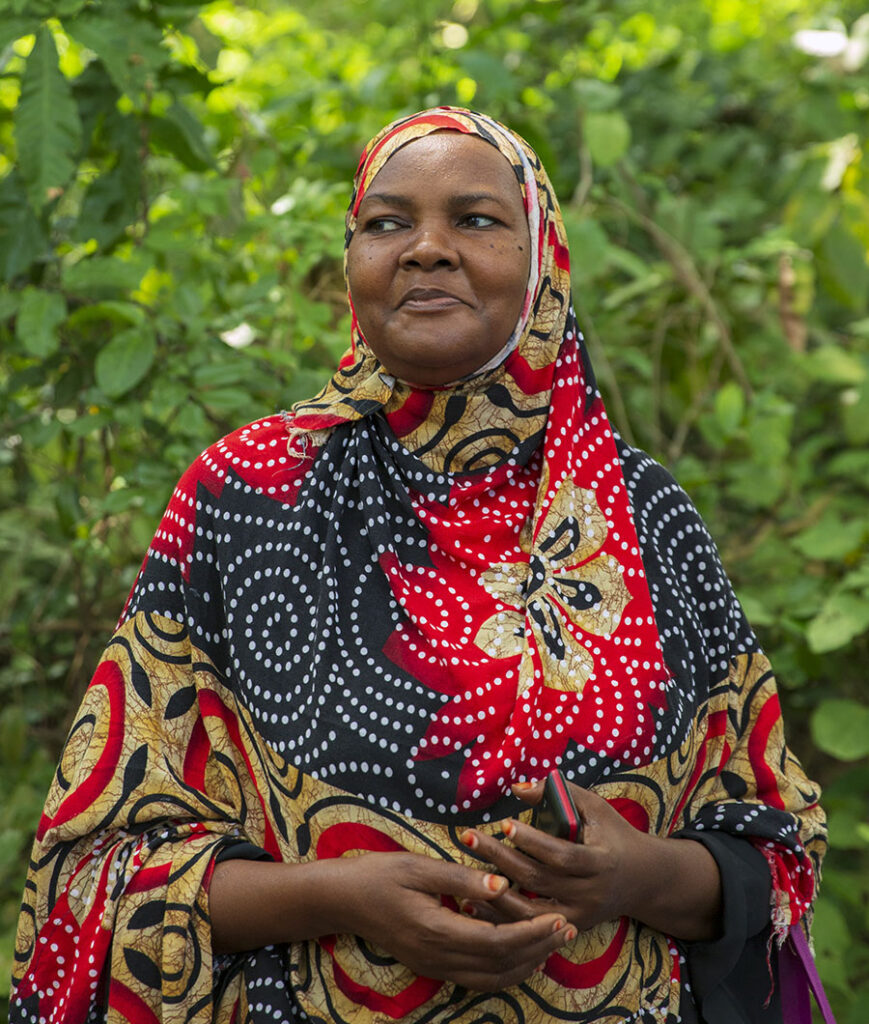
Another woman from the village, Mwanaisha, trained in beekeeping at the regional center. She has since cultivated her micro-enterprise in both honey and seaweed production.
“I was only doing seaweed farming before,” she said. “But now we’ve stabilized the bees in the forest and harvested honey. My production has improved.”
Geofrey said the other women of the village look up to Mwanaisha as an entrepreneur.
“I am very happy when people knock on my door and come for help, because honey is also used here for medicine,” Mwanaisha said.
With electrification and beekeeping, BCI has spurred economic opportunity in Uzi. Seaweed production is the next step in that process, not just for Uzi, but for many villages both in the north and south of the island, Geofrey said.
The Blue Economy drives economic opportunity and growth in Zanzibar
BCI’s goal is to ensure those most marginalized don’t miss out on the economic opportunity coming to Zanzibar.
“Zanzibar’s economy is poised for stronger growth, projected to reach 7.3 per cent in 2025,” Trends in Africa reported, including increased investment in the Blue Economy.
African Business magazine stated that the blue economy could exceed $1.5 trillion annually by 2050 in Africa.
“More than 38% of our population lives within 100 kilometers of the coast, with these marine and freshwater resources employing nearly 50 million Africans today—with projections to reach 85 million by 2035. Among them are 13.5 million small-scale fishers and aquaculture farmers who form the backbone of our food security, contributing approximately US$24 billion to continental GDP.” the magazine reported.
Geofrey said, citing that those who do the hardest work of producing raw materials often get the lowest amount of income. Another solar engineer in the village who also harvests seaweed, uniquely also hunts for shells in the ocean both for food, but to sell the shells.
“These shells are amazing,” said BCI-UK Board Chair Tracey Balch. “These will sell back in the UK for a high price.”
But that money doesn’t yet circle back to the women here doing the hard work, Geofrey said. “She sells 1 kilo of shells for the equivalent of maybe .25 to .40.”
Seaweed production is the next step toward changing that for the women of Uzi and the island as a whole.