
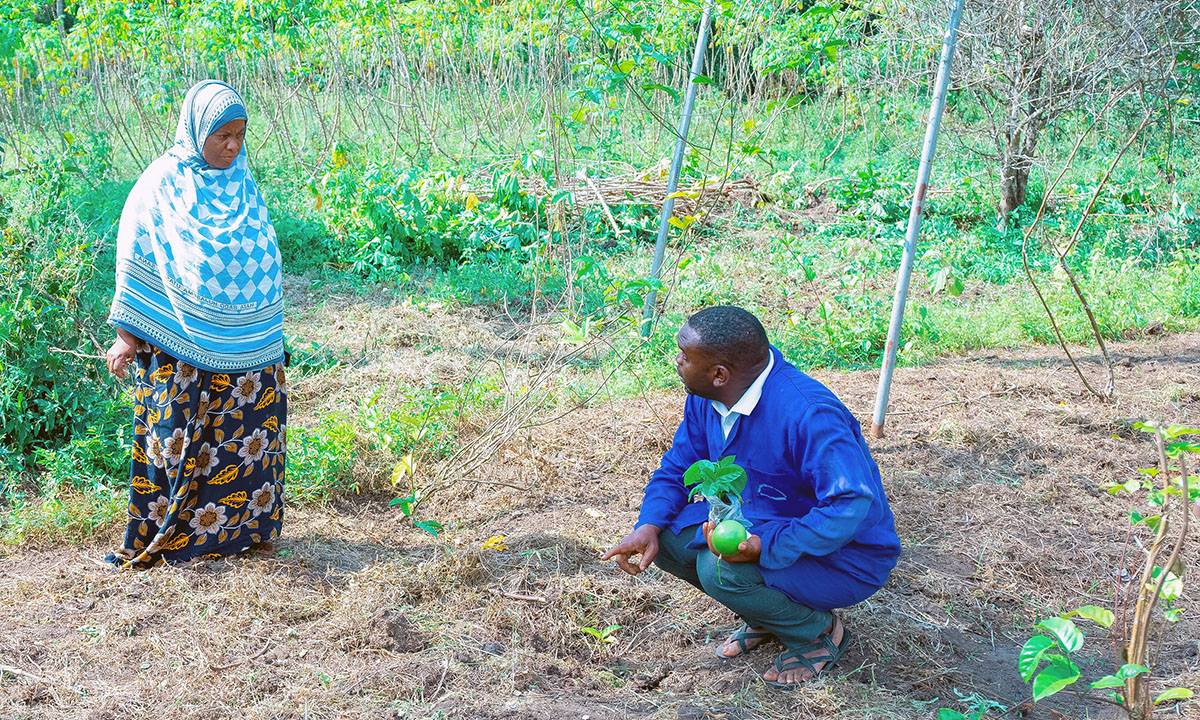
What a difference a year makes? That’s the feedback from Barefoot College International Zanzibar regenerative agriculture farmers who have applied the organic methodology they learned at the BCI Regional Center in Kinyasini.
“For many years when we grew passion fruit we would sometimes not harvest anything,” said Mwaka Haji Mohammed of Kigongoni Village. “But now the plants are large and growing much better.”
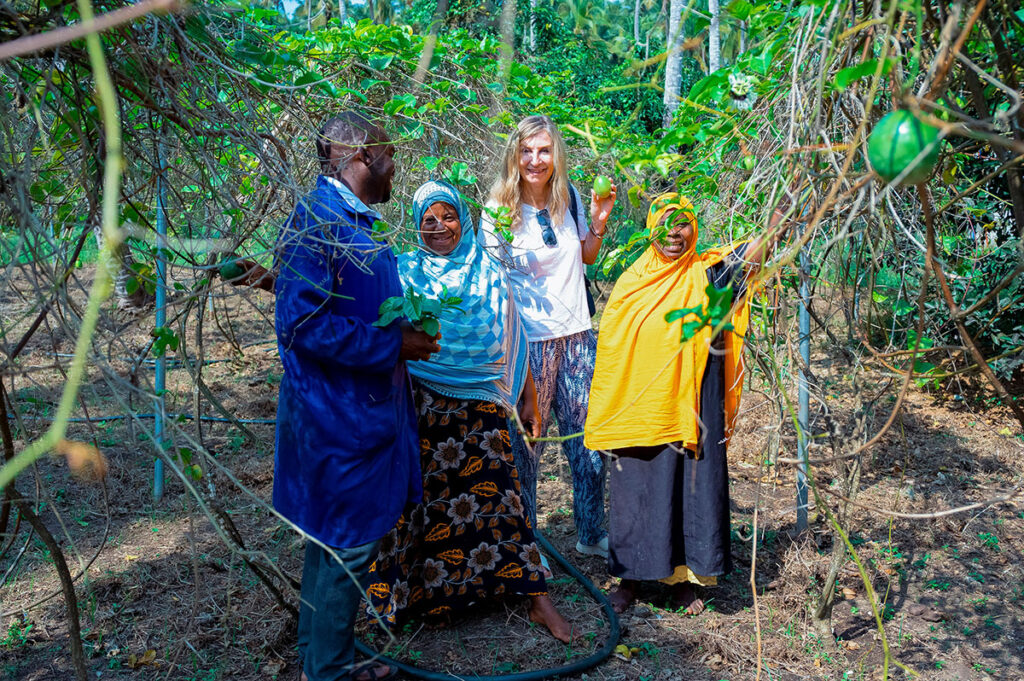
Haji Mohammed and two other women she farms with attended one of the first Zanzibar Regenerative Agricultural training sessions in 2023 held at the BCI regional center. After their training, they returned home and began to apply the techniques they learned.
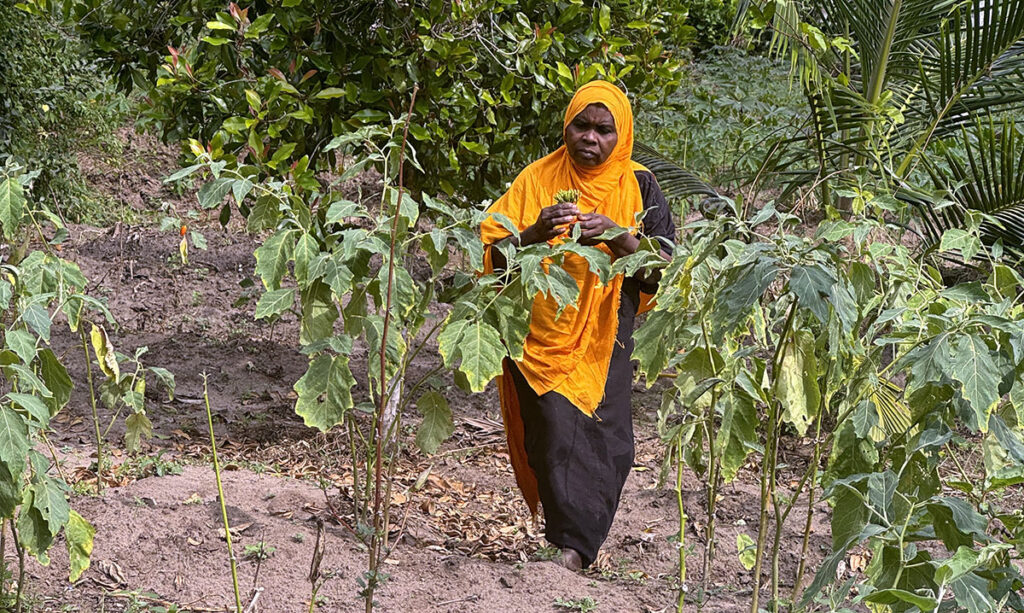
“We learned how to improve the soil, and not use chemicals any more,” she said. “We used to collect tree leaves and debris and burn it, but now we turn it into compost.”
The women cultivate plants from seeds and use natural processes to keep the ground moist between harvests. They also learned to mix plants like chili and ginger to make a natural pesticide.
Eliah Philbert Msuha, BCI-Zanzibar Regenerative Agriculture Program Officer said visiting his students’ farms is one of the best parts of his job.
“Every time I come out here to check on their work, I go home with all these nice fruits and vegetables. It is very good for me as the teacher,” he said.
Zanzibar regenerative agriculture training spurs economic development
Barefoot College International began creating its own farm following the advice and techniques mastered by the Msonge Organic Family Farm.
The farm launched two decades ago has grown to the point where they have three generations of family members working on the farm, serving an organic lunch to patrons and giving tours of the farm to educate people about regenerative practices.
“The majority of farming by women goes to consumption, to feed their families,” said Brenda Geofrey, BCI Country Director. “When the women come to us for training, they can transform their farms into a sustainable business and commercialize the production of their crops. Now they are planting and harvesting produce that is needed in the market and able to increase their income.”
Cassava and bananas are an example of produce that is in high demand in Zanzibar, she said.
The farm in Kigongoni village is just one of many throughout Zanzibar that are now applying the training they learned at the regional center’s farm.
Regenerative agriculture expanding rapidly
In April, BCI-Zazibar Regenerative Agriculture training started a new initiative providing farming equipment to 20 women in North Unguja, under the PIFProject. This program empowers women farmers to grow nutritious food, promote climate-resilient agriculture, and support environmental stewardship.
The team also expanded operations to Pemba Island with the launch of a regenerative agriculture training led by Hassan Faraj Ali, Regenerative Agriculture Program Manager. Twenty women in Mzambarauni and Junguni are now learning climate-smart farming techniques to build resilience against climate change. The program trainees receive farming equipment to start sustainable farms where they live. Because many families work together in villages the benefits of increased and improved regenerative agriculture impacts the entire village.
As part of it’s 10-year anniversary, BCI Zanzibar signed an MOU with Practical Permaculture Institute of Zanzibar to collaborate on sustainable that will further expand the Zanzibar regenerative agriculture program.
If you’d like to support new women trainees, please click here and select regenerative agriculture in the donation memo.