
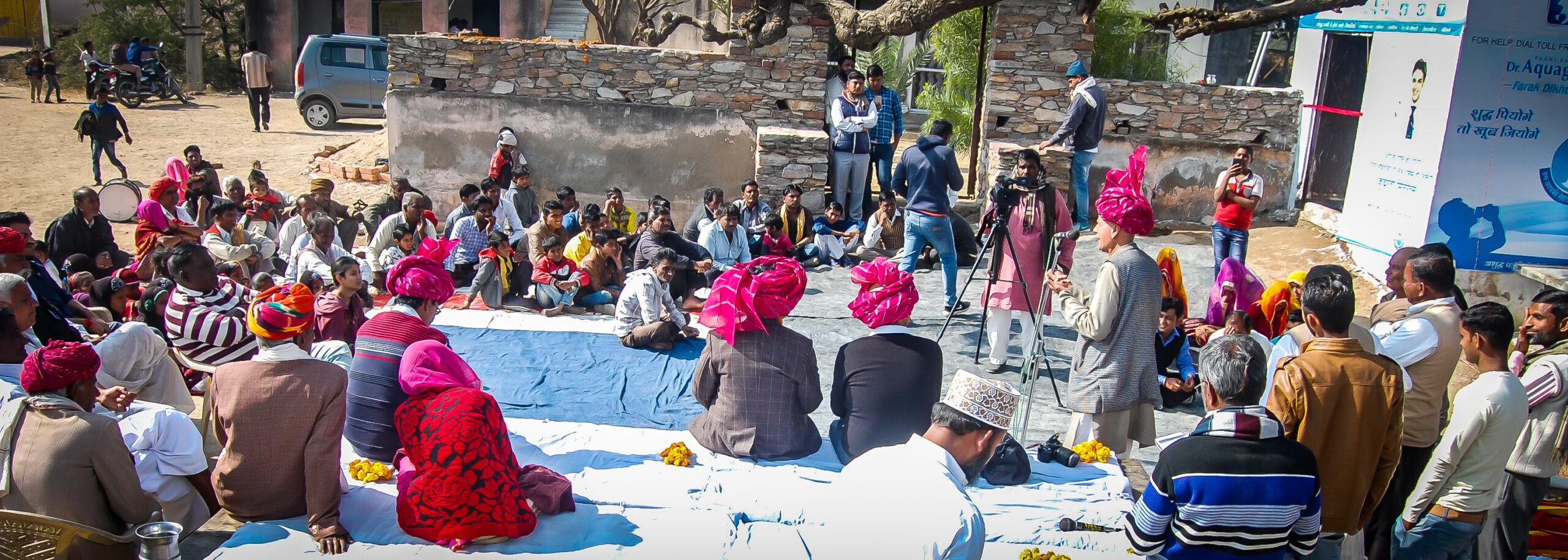
Pachipala village of Rajasthan celebrated the inauguration of its Water Treatment Plant on January 7th, 2019. The CSR team from Wacker Metroark Chemicals Pvt. Ltd. who have financially supported the project inaugurated the plant, and senior officials from Barefoot College, Block Development Officer of Silora Block, Sarpanch and residents of the village were present. Eureka Forbes Limited fabricated the plant.

Providing Hundreds with Safe Water
Pachipala village, which is located 30 kilometres from Kishangarh,

In recent years, the increasing threat to groundwater quality due to human activities has become a matter of critical concern. Due to lack of adequate infrastructure and resources, the waste is not properly collected, treated or disposed of; leading to accumulation and infiltration, resulting in groundwater contamination. In many of the areas groundwater is the only source of drinking water, thus a large population is exposed to the

Ground water has become a crucial source of water for meeting the requirements of various sectors in the country in the last few decades. It plays a vital role in India’s economic development and in ensuring its food security. The rapid pace of agricultural development, industrialization and urbanization has led to the over- exploitation and contamination of ground water resources in parts of the country, inducing diverse adverse environmental impacts and threatening its long-term sustainability.

Cleaner Options using RO
The

While the solution to a water crisis in any other water stressed region of India (or the world) would be rainwater harvesting and watershed development, the problem is compounded here because of the saline nature of the soil. So while both these initiatives are crucial, especially in the long term, what is also required, equally, is the immediate provision of sweet water. It is against this backdrop that the pilot project for 1 independent reverse osmosis (RO) plant in Pachipala villages has been formulated.

Our Barefoot Mission
The objectives of the project are to:
1. Provide the 500-strong population of Pachipala village a localised supply of clean, safe drinking water
2. Improve the health of people living in the village
3. Decentralise and demystify RO through capacity building
4. Demonstrating the principles and functioning of RO technology
5. Diminish caste discrimination by encouraging the members of all caste groups to fetch drinking water from a single source

The residents now have access to clean and safe drinking water. The community drinking water system is able to produce 1,000 litres of water every hour, making it able to cater to the entire village. Total project expenses are Rs. 7.5 Lakhs. Barefoot College was instrumental in mobilizing the community and successfully implementing the project. A water committee was formed in the village who will take care of the plant and a person was trained from the village to operate the plant. Therefore this plant is managed, controlled, operated and maintained by the community.

if you have any questions or comments about Barefoot’s water initiatives, please reach out to our water coordinator Dadi Jaswanth at
jaswanth@barefootcollege.org